What a check-engine light tells you—and what it cannot diagnose
A check-engine light reports that the vehicle's monitoring system has detected a relevant malfunction. It does not provide a complete diagnosis or name a part that must automatically be replaced. In the US OBD context, the system monitors emissions-related components and conditions, records diagnostic information and alerts the driver through the malfunction indicator lamp, or MIL. US EPA, On-Board Diagnostic Regulations and Requirements, questions 2–3
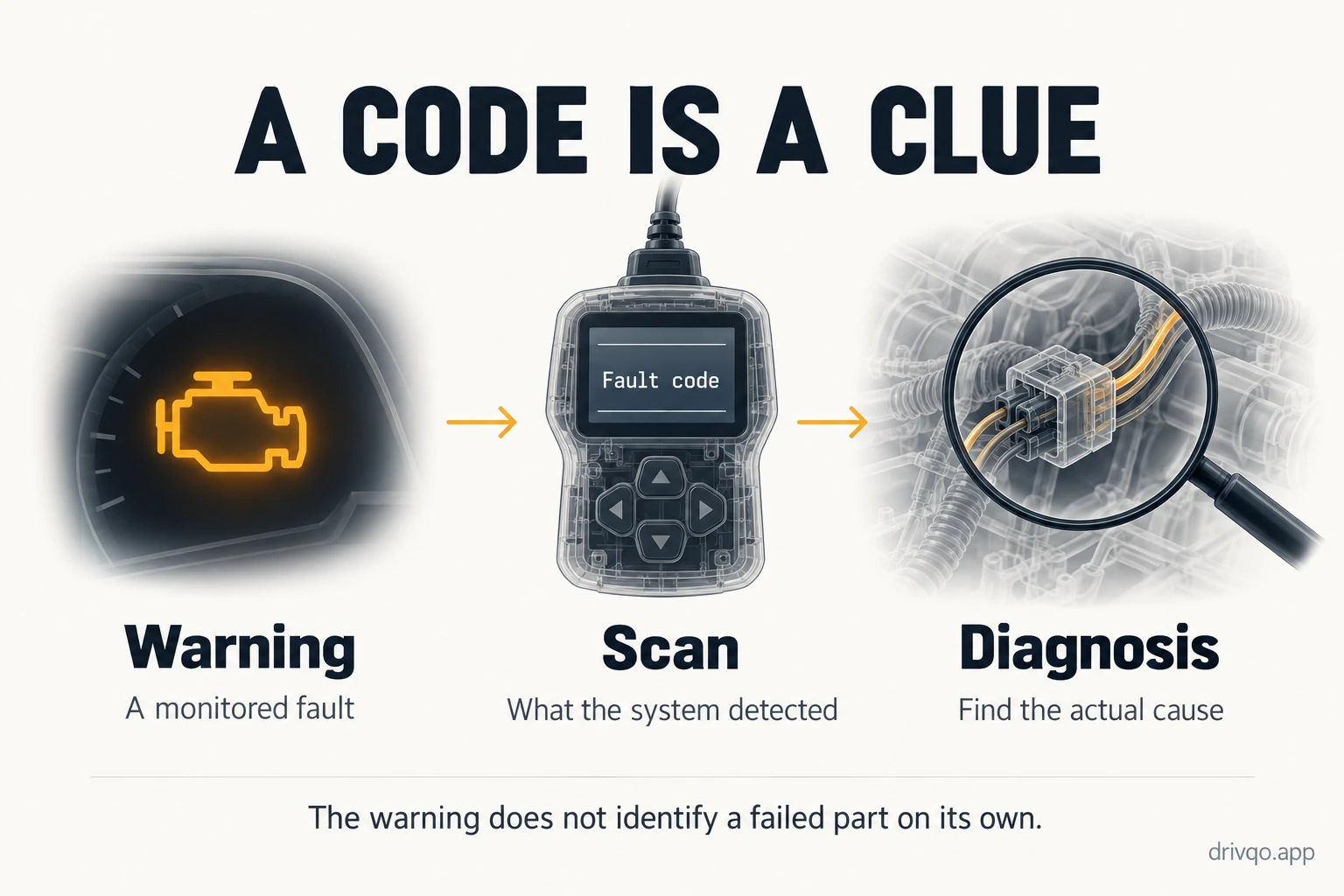
This is an explanation of the diagnostic process, not a decision tree declaring a particular vehicle safe to drive.
The warning and the code have different jobs
The lamp gets the driver's attention. A diagnostic trouble code, or DTC, gives the technician more specific information about what the monitoring system detected. EPA's introductory material describes storing the code in computer memory so it can be retrieved with diagnostic equipment. US EPA, Frequently Asked Questions About On-Board Diagnostics, EPA 420-F-97-003
Some diagnostic records also preserve operating conditions associated with the fault. That context helps distinguish a problem occurring under a particular load or temperature from one present continuously. The inspection procedure hosted by EPA explicitly describes storing both a DTC and engine operating conditions when an emissions malfunction is detected. OBDII Test Procedures, introduction
Reading that information is a starting point. The next question is why the reported condition exists. A description referring to a sensor or circuit does not logically establish whether the sensor itself, its connection or another part of the system caused the observed result.
Why a flashing lamp deserves prompt attention
EPA's OBD FAQ associates flashing during operation with a severe level of engine misfire that can damage emissions-control equipment, particularly the catalytic converter. It directs drivers to reduce speed, seek service promptly and consult the vehicle's manual for model-specific guidance. This should not be converted into a blanket instruction to keep driving. US EPA, EPA 420-F-97-003, Why Does the Dashboard Light Blink or Flash?
A steady lamp is not proof that a fault is harmless. Other warnings, abnormal running, temperature indications and the owner's manual still matter. A short web explanation cannot make a drive-or-stop decision for an unidentified car in an unknown condition.
A scan is not the whole inspection
EPA's guidance on investigating poor fuel economy lists an OBD check alongside checks of ignition, fuel delivery, vacuum hoses, transmission behaviour and other systems. That is a useful picture of diagnosis: electronic information narrows the investigation, while vehicle-specific tests establish the cause. It is not a list of parts to buy. US EPA, Frequent Questions: excessively low fuel economy
Keep the exact code, symptoms and operating circumstances available for the technician. Erasing information to hide the lamp is not evidence of a repair. EPA also distinguishes readiness information from the warning indication in its inspection guidance; a recently cleared system may not yet have completed its checks. US EPA, Performing Onboard Diagnostic System Checks, definitions and test procedure
What this means for understanding your car
Treat the lamp as a request for attention and the code as evidence to investigate. Neither replaces the vehicle's service information. If the vocabulary is unfamiliar, our essential car-systems guide gives the mechanical context behind the dashboard symbols.
Illustration: AI-generated and checked against the explanation. Conceptual only; sources are linked beside the relevant claims.